
By Miss Gaby Castellanos
In almost all of my conversations with families, a phrase comes up that I hear frequently and that is born from the most genuine love: “I just want my child to be happy.”
But when I ask, What does that happiness look like? How do we build it? What tools does your child need to sustain it in such a changing and overstimulating world? The answer is less clear.
Because happiness is not a destination, nor a permanent state, nor the absence of frustration. And it certainly does not mean letting our children do whatever they want.
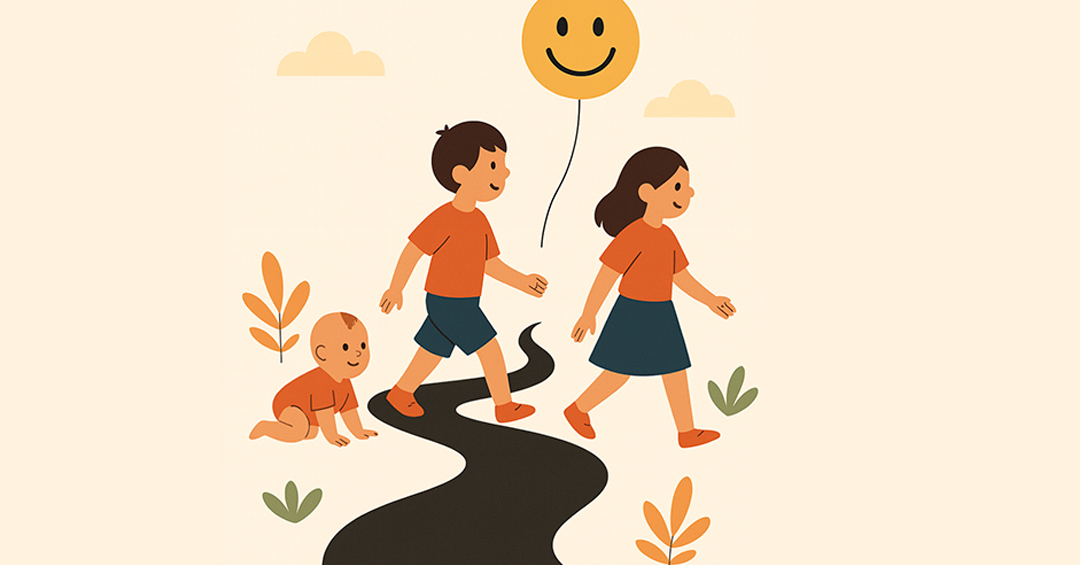
True happiness is a path that is built, trained, and modeled from childhood, just like any other important life skill.
Making them happy is not about avoiding discomfort
More than ever, children and adolescents are growing up in an environment full of immediate stimuli: screens, instant gratification, constant comparison.
In this context, it’s easy to fall into the mistaken idea that “being happy” means not facing difficulties or having certain objects or experiences.
But here is a truth in education that never goes out of style:
A child or adolescent who is never allowed to experience frustration will not learn to solve problems, wait, tolerate discomfort, or recover—and without these abilities, happiness is at risk.
Children need to experience that they don’t always win, that things require effort, that it can hurt, and that they are capable of handling it. Adolescents do too—especially them—as they go through a stage in which the brain is developing skills such as self-control, reflection, identity, and tolerance for uncertainty.
When we prevent them from facing challenges, we take away invaluable opportunities for growth.
If we want our children to become fulfilled adults, what should we teach them today?
Below are the essentials that never go out of style. These are the socio-emotional tools that should accompany them from an early age—expressed differently at each stage, but always with the same intention: to form capable, confident, empathetic, and resilient human beings.
- Self-Discipline
This is not blind obedience.
It is the ability to do what needs to be done, even when I don’t feel like it.
- In young children: routines, taking turns, cleaning up.
- In elementary school: organization, responsibility.
- In adolescents: managing time, honoring commitments, avoiding procrastination.
Self-discipline provides freedom—it allows us to make better choices.
- Frustration Tolerance
Life is not immediate. Nothing worthwhile is.
- In young children: waiting their turn, accepting when a game doesn’t go as planned, trying again even when it “doesn’t work,” and handling small daily disappointments.
- In children: accepting limits and trying again.
- In adolescents: tolerating “no,” managing disappointment, solving social or academic problems without becoming overwhelmed.
Frustration, when well-supported, builds character.
- Emotional Regulation
Happiness is learning to live with everything we feel.
- In young children: identifying basic feelings (“I’m sad,” “I’m angry,” “I’m scared”), calming down with adult support, using simple words to express how they feel, and learning small strategies like breathing or asking for a hug.
- In children: naming emotions.
- In adolescents: managing impulses, questioning automatic thoughts, seeking help when needed.
Emotional well-being is a skill that can be trained.
- Empathy and Human Connection
Deep happiness is built through healthy relationships.
- In young children: learning to wait their turn, offering a toy, recognizing when a classmate is sad, using phrases like “Do you want to play with me?” or “I’m sorry,” with adult support.
- In children: sharing and caring for others.
- In adolescents: listening, respecting differences, apologizing, setting healthy boundaries, managing friendships and social pressure.
Empathy is not taught through words—it is modeled.
- Perseverance
What is worthwhile is challenging.
- Children: trying again.
- Adolescents: sustaining long-term effort, especially when external validation (grades, friendships, social media) doesn’t come immediately.
Perseverance makes happiness more solid.
- Responsible Autonomy
Autonomy is not “freedom without limits”; it is learning to make decisions with judgment.
- In young children: choosing between two simple options (this color or that one, this game or that one), putting things away, trying to do something on their own before asking for help, and assuming small natural consequences (e.g., “If I don’t put it away, I can’t keep playing”).
- In children: small decisions.
- In adolescents: decisions involving organization, natural consequences, digital responsibility, and social relationships.
An autonomous adolescent will become a confident adult.
- Gratitude
Happiness is nourished by the ability to notice what is good.
- In young children: recognizing pleasant moments from the day (“I liked playing with…,” “I liked my story”), expressing thanks spontaneously through gestures or simple words, and celebrating small daily joys.
- In children: appreciating simple things.
- In adolescents: counteracting comparison and the feeling of “it’s never enough” through mindful appreciation.
Gratitude is an antidote to many modern anxieties.
- Purpose
Even from an early age, human beings search for meaning.
- In young children: showing natural curiosity, choosing activities that interest them, participating enthusiastically in games or projects, and discovering what brings them joy or interest.
- In children: exploring and discovering.
- In adolescents: connecting strengths, interests, and values to form identity.
Happiness flourishes when I discover what I’m good at and how I can contribute.
Visualize Your Child as an Adult
Imagine your child as an adult. Would you want them to be someone who:
- collapses in the face of frustration?
- avoids challenges?
- depends on others to stay organized?
- doesn’t know how to manage emotions?
- or lives in constant comparison?
Probably not.
Most families, when we go deeper, want an adult who:
- knows themselves
- maintains healthy relationships
- is resilient
- finds purpose
- treats themselves with kindness
- has tools to navigate real life
That is happiness.
Happiness is not given—It Is trained
It’s not about giving them a perfect path, but about giving them the tools to walk it.
Happiness is not the absence of difficulty; it is the ability to face it without losing hope. In our school community, we see it every day:
Children and adolescents don’t need us to protect them from life—they need us to teach them how to live it.
Thank you for trusting us to walk alongside your children.
At CSQ, supporting them as they build a solid and deeply human happiness is a commitment we honor every day. Let’s continue forming—together—children and adolescents capable of facing life with hope, character, and heart.
With love,
Miss Gaby
________________________________________________________________________________________
La felicidad como camino ¿Qué significa realmente “quiero que mi hijo sea feliz”?
Por Miss Gaby Castellanos
En casi todas mis conversaciones con familias, aparece una frase que escucho con frecuencia y que nace del amor más auténtico: “Yo solo quiero que mi hijo sea feliz.”
Pero cuando pregunto: ¿cómo se ve esa felicidad?, ¿cómo la construimos?, ¿qué herramientas necesita tu hijo para sostenerla en un mundo tan cambiante y sobre estimulado?, la respuesta es menos clara.
Porque la felicidad no es un destino, ni un estado permanente, ni tampoco la ausencia de frustraciones. Y, definitivamente, no significa dejar que nuestros hijos hagan lo que quieran. La felicidad verdadera es un camino que se forja, se entrena y se modela desde la infancia, igual que cualquier otra habilidad importante en la vida.
Hacerlos felices no es evitarles el malestar
Hoy más que nunca, los niños y adolescentes crecen en un entorno lleno de estímulos inmediatos: pantallas, gratificación rápida, comparaciones constantes.
En este contexto, es fácil caer en la idea equivocada de que “ser feliz” es no enfrentarse a dificultades o tener ciertos objetos o experiencias.
Pero aquí viene una verdad que jamás pasa de moda en educación:
Un niño o adolescente al que nunca se le permite frustrarse no aprenderá a resolver, a esperar, a tolerar, ni a recuperarse, y sin esas capacidades, la felicidad queda en riesgo.
Los niños necesitan experimentar que no siempre se gana, que las cosas requieren esfuerzo, que puede doler, y que ellos pueden con eso.
Los adolescentes también, de hecho, especialmente ellos; que atraviesan la etapa en la que el cerebro está desarrollando habilidades como el autocontrol, la reflexión, la identidad y la tolerancia a la incertidumbre. Cuando evitamos que enfrenten retos, les robamos oportunidades valiosísimas de crecimiento.
Si queremos que nuestros hijos sean adultos plenos, ¿qué debemos enseñarles hoy?
A continuación presento los básicos que jamás pasan de moda.
Son las herramientas socioemocionales que deben acompañarlos desde pequeños, expresadas en cada etapa de manera distinta, pero con una misma intención: formar seres humanos capaces, seguros, empáticos y resilientes.
- Autodisciplina
No es obediencia ciega.
Es la capacidad de hacer lo que toca, incluso cuando no quiero.
- En los más pequeños: rutinas, turnos, recoger.
- En primaria: organización, responsabilidad.
- En adolescentes: manejar su tiempo, cumplir compromisos, evitar postergar.
La autodisciplina otorga libertad: permite elegir mejor.
- Tolerancia a la frustración
La vida no es inmediata. Nada que valga la pena lo es.
- En los más pequeños: esperar turnos, aceptar que un juego no salió como querían, intentar de nuevo aunque “no les salga” y manejar pequeñas decepciones del día.
- En niños: aceptar límites y volver a intentar.
- En adolescentes: tolerar el “no”, manejar decepciones, resolver problemas sociales o académicos sin desbordarse.
La frustración, bien acompañada, construye carácter.
- Regulación emocional
La felicidad es saber convivir con todo lo que sentimos.
- En los más pequeños: identificar sensaciones básicas (“estoy triste”, “me enojé”, “tengo miedo”), calmarse con apoyo del adulto, usar palabras sencillas para expresar cómo se sienten y aprender pequeñas estrategias como respirar o pedir un abrazo.
- En niños: poner nombre a emociones.
- En adolescentes: manejar impulsos, cuestionar pensamientos automáticos, buscar ayuda cuando la necesitan.
El bienestar emocional es una competencia que se entrena.
- Empatía y conexión humana
La felicidad profunda se construye en relaciones sanas.
- En los más pequeños: aprender a esperar turnos, ofrecer un juguete, reconocer cuando un compañero está triste, usar frases como “¿juegas conmigo?” o “lo siento” con apoyo del adulto.
- En niños: compartir, cuidar.
- En adolescentes: escuchar, respetar diferencias, disculparse, establecer límites saludables, manejar amistades y presiones sociales.
La empatía no se predica: se modela.
- Perseverancia
Lo que vale la pena cuesta.
- Niños: intentarlo de nuevo.
- Adolescentes: sostener esfuerzos a largo plazo, sobre todo cuando la validación externa (calificaciones, amistades, redes sociales) no llega de inmediato.
La perseverancia hace que la felicidad sea más sólida.
- Autonomía responsable
Autonomía no es “libertad sin límites”; es aprender a tomar decisiones con criterio.
- En los más pequeños: elegir entre dos opciones simples (este color o este otro, este juego o aquel), guardar sus cosas, intentar hacer algo por sí mismos antes de pedir ayuda y asumir pequeñas consecuencias naturales como “si no guardo, no puedo seguir jugando”.
- En niños: decisiones pequeñas.
- En adolescentes: decisiones que involucran organización, consecuencias naturales, manejo digital, relaciones sociales.
Un adolescente autónomo será un adulto seguro.
- Gratitud
La felicidad se nutre de la capacidad de mirar lo bueno.
- En los más pequeños: reconocer momentos agradables del día (“me gustó jugar con”, “me gustó mi cuento”), agradecer espontáneamente con gestos o palabras simples, y celebrar pequeñas alegrías cotidianas.
- En niños: agradecer cosas simples.
- En adolescentes: combatir la comparación y el “nunca es suficiente” con apreciación consciente.
La gratitud es un antídoto contra muchas ansiedades modernas.
- Propósito
Incluso desde pequeños, los seres humanos buscan sentido.
- En los más pequeños: mostrar curiosidad natural, elegir actividades que les llaman la atención, participar con entusiasmo en juegos o proyectos, y descubrir qué cosas les generan alegría o interés
- En niños: explorar, descubrir.
- En adolescentes: conectar fortalezas, intereses y valores para formar identidad.
La felicidad florece cuando encuentro para qué soy bueno y cómo puedo aportar.
Visualiza a tu hijo de adulto:
Imagina por un momento a tu hijo ya adulto: ¿Quieres que sea alguien que…
- ¿se derrumba ante la frustración?
- ¿evita retos?
- ¿depende de otros para organizarse?
- ¿no sabe manejar sus emociones?
- ¿o que vive comparándose constantemente?
Seguramente no.
La mayoría de las familias,cuando profundizamos, queremos un adulto que:
- se conozca
- mantenga relaciones sanas
- tenga resiliencia
- encuentre propósito
- se trate con amabilidad
- tenga herramientas para navegar la vida real.
Eso es ser feliz.
La felicidad no se regala: se entrena
No se trata de darles un camino perfecto, sino de darles herramientas para caminarlo.
La felicidad no es la ausencia de dificultades: es la capacidad de enfrentarlas sin perder la esperanza. En nuestra comunidad escolar, lo vemos todos los días:
Los niños y adolescentes no necesitan que los protejamos de la vida,sino que les enseñemos a vivirla.
Gracias por confiar en nosotros para caminar junto a sus hijos.
En CSQ, acompañarlos a construir una felicidad sólida y humana es un compromiso que honramos todos los días. Sigamos formando, juntos, niños y adolescentes capaces de enfrentar la vida con esperanza, carácter y corazón.
Con cariño,
Miss Gaby

