
By Miss Gaby Castellanos
In parents’ WhatsApp groups, “bullying” has become a buzzword.
We often hear: “They called him ugly during recess—they’re bullying him,” or “They didn’t invite her to play—they’re isolating her.”
But… What if not everything that makes our children uncomfortable is bullying?
What is bullying?
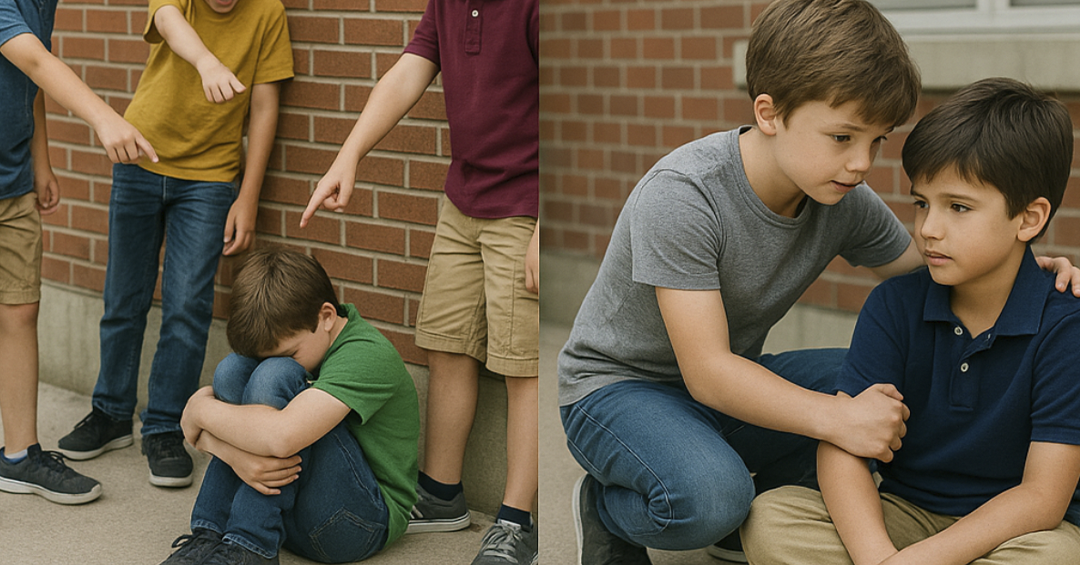
According to Alberta’s Ministry of Education, bullying is repeated, intentionally cruel behavior with a power imbalance.
It’s not a misunderstanding or a passing conflict—it’s a pattern of aggression meant to harm or dominate.
It can take several forms:
• Verbal: insults, mockery, threats, humiliating jokes.
• Physical: pushing, hitting, damaging belongings.
• Social: excluding, spreading rumors, manipulating friendships.
• Cyber: sending cruel messages or sharing images without permission.
When harm is intentional, repeated, and involves unequal power, we’re indeed talking about bullying.
What isn’t bullying?
Sometimes we confuse bullying with other normal social experiences of growing up.
According to the same Alberta document, there are important differences between joking, conflict, rudeness, and a single hurtful act:
- Teasing: both laugh, there’s affection, no one aims to hurt.
• Conflict: disagreement between equals without intent to harm.
• Rudeness: someone says or does something unpleasant without realizing the impact.
• Meanness: intentional annoyance, but it happens once and there’s no power imbalance.
Conflict, in fact, is a life skill and an opportunity for parents to observe what abilities their child might be missing to resolve it:
Does he struggle to express his feelings?
Does she not know how to set boundaries?
Does he react with anger or shut down under tension?
Instead of rushing to rescue or victimize them, we can guide them to develop emotional and social resources.
When we turn each conflict into a learning moment, we strengthen their self-esteem, empathy, and ability to stand up for themselves respectfully.
On the other hand, if we constantly victimize them, we teach them to see themselves as weak and dependent—and that actually makes them more vulnerable to real bullying in the future.
Learning to resolve differences teaches empathy, self-control, negotiation, and resilience.
If we prevent children from facing and managing disagreements, we take away the chance to develop these essential skills.
Words can also stir storms
Imagine this: as students rush out to recess, they quickly line up. In the movement, one child stumbles and accidentally pushes another, who falls to the ground.
A third classmate, seeing him on the floor and not understanding what happened, reacts impulsively and kicks him in frustration, thinking it was intentional.
The teacher immediately steps in. Both children acknowledge what happened: the first explains it was an accident, the second admits his reaction and apologizes. They talk it through, repair the situation, and everyone moves on with their day.
But in the parents’ chat, the story takes a different tone:
“A kid pushed his classmate on purpose, and another attacked him. This is bullying!”
Within seconds, the story spreads and fear grows.
What was a single incident—handled and resolved with support—turns, in the collective narrative, into an alarming story.
And that difference between what truly happened and how we tell it can create anxiety, judgment, and unnecessary mistrust.
Not every concerning incident is bullying.
Yes, it was inappropriate behavior, and it must be addressed clearly and with guidance—but there was no repetition, abuse of power, or systematic intent to harm.
Words matter, they can build bridges or stir storms.
Before sharing, it’s worth pausing, asking, and listening to the full version.
Getting along Is also taught
Healthy relationships are the foundation of healthy development and of a caring society.
The family, school, and community play key roles in fostering empathy, resilience, and prosocial behavior.
When adults and educators model respect, dialogue, and repair, we give children tools to relate without hurting others and to recognize when a behavior does cross the line.
Healthy relationships aren’t built by avoiding problems, but by facing them with respect, listening, and compassion.
It all begins at home
Before looking at what happens during recess or at parties, it’s worth reflecting on what happens at home.
How do I react when things don’t go as I expect?
How do I talk about others?
How do I handle anger or frustration?
How much empathy do I show toward others’ mistakes?
Do I criticize other parents or classmates in front of my children?
Do I engage in gossip about other children or judge their parents’ choices?
Am I an example of respect when something bothers or hurts me?
Children don’t just learn from what we say—they learn from who we are.
If home breathes respect, empathy, and dialogue, school will reflect it too.
If home is full of judgment, exaggeration, or aggression, children will imitate it—with fewer filters and more pain. Educating for coexistence doesn’t mean shielding from conflict—it means teaching how to face it with respect and an open heart. And this isn’t done in WhatsApp groups — it’s done by talking with our children, their teachers, and by being part of a community that adds value.
Bullying is real and must be addressed firmly.
But labeling everything as bullying diminishes its seriousness and blinds us to what truly matters: helping our children learn to coexist, repair, and grow with others.
Because many times, real learning isn’t about avoiding conflict—
It’s about how we adults handle things when we believe that everything is bullying.
With love,
Miss Gaby Castellanos
Head of School
__________________________________________________________________
“No todo es bullying: cuando el conflicto también educa”
Por Miss Gaby Castellanos
En los grupos de WhatsApp de los papás, el “bullying” se ha vuelto palabra de moda.
A veces escuchamos: “Le dijeron feo en el recreo, lo están bulleando”, o “No la invitaron al juego, seguro la están aislando”. Pero… ¿y si no todo lo que incomoda a nuestros hijos es bullying?
¿Qué sí es bullying?
De acuerdo al Ministerio de Educación de Alberta esta es la definición de lo que sí es.
El bullying es una conducta repetida, intencionalmente cruel y con un desequilibrio de poder.
No es un malentendido ni un conflicto pasajero: es un patrón de agresión que busca dañar o dominar.
Puede presentarse de distintas formas:
- Verbal: insultos, burlas, amenazas, bromas que humillan.
- Física: empujones, golpes, daño a pertenencias.
- Social: excluir, difundir rumores, manipular amistades.
- Cibernética: enviar mensajes crueles o difundir imágenes sin permiso.
Cuando el daño es intencional, repetido y existe un poder desigual, sí hablamos de bullying.
¿Y qué no es bullying?
A veces confundimos el bullying con otras experiencias normales del crecimiento social.
Existen de acuerdo al mismo documento de Alberta, diferencias importantes entre broma, conflicto, rudeza y acto hiriente puntual:
- Broma: ambos se ríen, hay cariño, nadie busca herir.
- Conflicto: hay desacuerdo entre iguales y sin intención de lastimar.
- Rudeza: alguien dice o hace algo desagradable sin darse cuenta del impacto.
- Acto hiriente puntual: existe intención de molestar, pero ocurre una sola vez y no hay desequilibrio de poder.
El conflicto, de hecho, es una herramienta de vida y una oportunidad como padres para observar qué habilidades le faltan a nuestro hijo para resolverlo:
¿le cuesta expresar lo que siente?, ¿no sabe poner límites?, ¿reacciona con enojo o se bloquea ante la tensión?
En lugar de apresurarnos a rescatarlo o victimizarlo, podemos acompañarlo a desarrollar recursos emocionales y sociales. Cuando convertimos cada conflicto en aprendizaje, fortalecemos su autoestima, su empatía y su capacidad para defenderse con respeto. Por el contrario, si lo victimizamos constantemente, le enseñamos a verse débil y dependiente —y eso sí lo hace más propenso a sufrir bullying real en el futuro.
Aprender a resolver diferencias enseña empatía, autocontrol, negociación y resiliencia.
Si evitamos que los niños enfrenten y gestionen los desacuerdos, les quitamos la oportunidad de desarrollar estas habilidades esenciales.
Las palabras también pueden desatar tormentas
Imagina esto: al salir a recreo los alumnos se apresuran a formarse. En el movimiento, un niño tropieza y sin querer empuja a otro, que cae al suelo.
Un tercer compañero, al verlo en el piso y sin entender lo ocurrido, reacciona impulsivamente y le da una patada molesto, pensando que había sido intencional.
El maestro interviene de inmediato. Ambos niños reconocen lo sucedido: el primero explica que fue un accidente, el segundo admite su reacción y se disculpa. Se dialoga, se repara el daño y todos continúan su día.
Pero en el chat de papás, la historia cambia de tono:
“Un niño empujó a propósito a su compañero y otro lo agredió. ¡Esto es bullying!”
En segundos, la versión se amplifica y el miedo crece. Lo que fue un incidente único, atendido y resuelto con acompañamiento, se transforma —en la narrativa colectiva— en una historia alarmante.
Y esa diferencia entre lo que realmente pasó y cómo lo contamos puede generar ansiedad, juicios y desconfianza innecesaria
No todo hecho delicado es bullying.
Sí fue una conducta inapropiada, y debe atenderse con claridad y acompañamiento,pero no hubo repetición, abuso de poder ni intención sistemática de dañar.
Las palabras importan: pueden construir puentes o levantar tormentas.
Antes de compartir, vale la pena respirar, preguntar y escuchar toda la versión.
Relacionarse bien también se enseña
Las relaciones saludables son la base del desarrollo sano y de una sociedad que cuida a sus miembros.
La familia, la escuela y la comunidad tienen un papel esencial en formar empatía, resiliencia y conducta prosocial.
Cuando adultos y educadores modelamos respeto, diálogo y reparación, damos a los niños las herramientas para relacionarse sin dañar y para reconocer cuándo una conducta sí cruza la línea.
Las relaciones sanas no se construyen evitando los problemas, sino enfrentándolos con respeto, escucha y compasión.
Todo empieza en casa
Antes de mirar lo que pasa en el recreo o en fiestas, vale la pena mirar lo que pasa en nuestro hogar.
¿Cómo reacciono cuando algo no sale como espero?
¿Cómo hablo de los demás?
¿Cómo manejo mi enojo o mi frustración?
¿Cuánta empatía muestro frente al error ajeno?
¿Critico a otros padres o compañeros delante de mis hijos?
¿Me presto a chismes para hablar de un niño ajeno o para juzgar el estilo de crianza de sus papás?
¿Soy ejemplo de respeto cuando algo me incomoda o me duele?
Los niños no aprenden solo de lo que decimos, sino de lo que somos.
Si en casa se respira respeto, empatía y diálogo, en la escuela florecerán también.
Si en casa se juzga, se exagera o se agrede, los niños lo replican —solo que con menos filtros y más dolor.
Educar en convivencia no es proteger del conflicto, sino enseñar a enfrentarlo con respeto y corazón abierto. Y esto no se hace en los grupos de whatsapp se hace dialogando con nuestros hijos, sus maestros y formando parte de una comunidad que suma.
El bullying sí existe, y debemos atenderlo con firmeza.
Pero etiquetar todo como bullying desvirtúa su gravedad y nos impide ver lo más importante: ayudar a nuestros hijos a convivir, a reparar y a crecer con otros.
Porque muchas veces, el verdadero aprendizaje no está en evitar el conflicto,
sino en cómo lo enfrentamos los adultos cuando creemos que “todo es bullying”.
Con cariño,
Miss Gaby Castellanos
Directora General

